

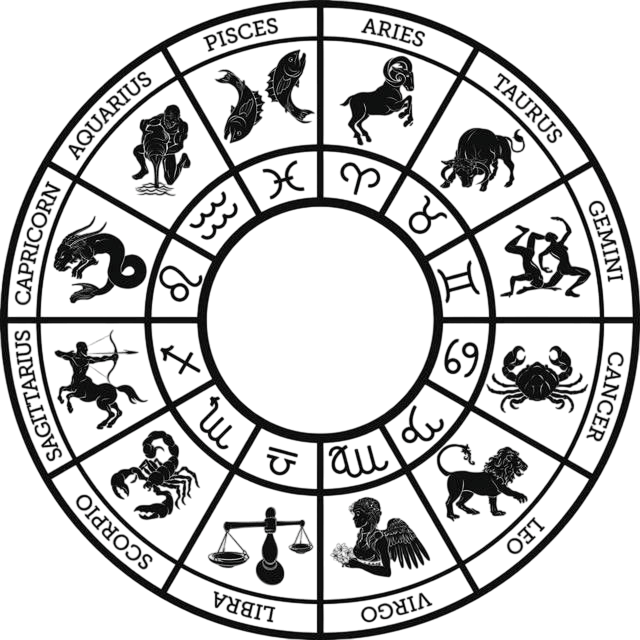
Guna Milan is a traditional Vedic astrology method used within Kundli matching to compare the compatibility of a prospective bride and groom. The system evaluates eight Kootas and assigns a maximum of 36 points, which is why it’s commonly referred to as the 36-Guna or 36-point matching system.
What Is Guna Milan?
Guna Milan primarily uses each person’s Moon sign (Rashi) and Nakshatra as the basis for its calculations, rather than the Sun sign most people are familiar with. It’s built on a framework called Ashtakoota – “ashta” meaning eight, “koota” meaning aspect. The two terms describe different layers of the same idea: Guna Milan is the act of matching two charts for compatibility, while Ashtakoota is the eight-factor structure that makes that matching possible.
You’ll also see the same concept referred to by a few different names:
- Gun Milan (a common spelling variant)
- Ashtakoot Milan
- 36 Guna matching or the 36-point compatibility score
All of these refer to the same underlying calculation.
Guna Milan vs Kundli Matching: What’s the Difference?
These two terms get used interchangeably, but Guna Milan is really just one component within the larger Kundli matching process, not a substitute for it.
Guna Milan
- A point-based system, scored out of 36, based specifically on the Moon’s position in each partner’s birth chart
- Built on the Ashtakoota framework, which evaluates 8 categories, including temperament (Gana), health-related compatibility (Nadi), and mental rapport (Graha Maitri)
- A score of 18 or above is traditionally treated as an acceptable baseline
- Focused narrowly on Moon-sign and Nakshatra-based compatibility, covering instinctive and behavioral alignment rather than the full chart
Kundli Matching
- A broader, more complete study of both partners’ full birth charts
- Looks at elemental balances, planetary positions, house lords, and relevant Dashas or life-path indicators beyond the Moon alone
- Checks for specific concerns such as Mangal Dosha and Nadi Dosha in more depth than Guna Milan’s scoring alone can capture
- Offers a fuller picture of long-term compatibility, covering areas Guna Milan’s narrower scope doesn’t reach
Guna Milan vs Kundli Matching at a Glance
| Guna Milan | Kundli Matching | |
| Scope | Point-based system, out of 36 | Full astrological chart study |
| Focus | Moon sign and Nakshatra compatibility (Ashtakoota) | Overall planetary positions, houses, and Doshas |
| Depth | A structured snapshot of behavioral compatibility | A more complete view of long-term compatibility factors |
Where Does Guna Milan Come From?
Ashtakoota Milan developed within classical Vedic astrology as a way to compare two people through fixed categories rather than open-ended judgment. Because each Koota follows a defined scoring rule, the calculation is more standardized than a purely interpretive reading – though individual astrologers and regional schools can still differ in how they apply certain rules.
Some South Indian traditions instead follow Dashakoota, which adds two categories, Rajju and Vedha, to the original eight. Ashtakoota remains the version most people mean when they reference “Guna Milan” or a “36 Guna score.”
How Does Guna Milan Work?
An astrologer needs accurate birth details for both people – date, time, and place of birth. From those, the Moon’s position is calculated for each chart, establishing both partners’ Moon sign and Nakshatra. Each of the eight Kootas is then scored independently and summed into a final total.
Why Is Birth Time Important in Guna Milan?
Since the calculation depends on Moon sign and Nakshatra, an inaccurate birth time can occasionally shift the Moon into a different Nakshatra, particularly when the birth falls close to a Nakshatra boundary. Accurate birth details are therefore an important part of Kundli matching by date of birth and time, especially in cases where the Moon sits near that boundary.
What Are the 8 Kootas in Ashtakoota Guna Milan?
| Koota | Maximum Points | Traditionally Associated With |
| Varna | 1 | Temperament, values, and ego dynamics |
| Vashya | 2 | Mutual influence and attraction |
| Tara | 3 | Birth-star compatibility and wellbeing |
| Yoni | 4 | Physical and instinctive compatibility |
| Graha Maitri | 5 | Mental and intellectual compatibility |
| Gana | 6 | Temperament and behavioral compatibility |
| Bhakoot | 7 | Emotional and family compatibility |
| Nadi | 8 | Traditional health and progeny considerations |
Each Koota carries a different maximum, rising from one point at the smallest to eight at the largest, which shapes how much a shortfall in any single category actually matters.
Varna Koota: Meaning and 1-Point Score
Varna places each Moon sign into one of four categories – Brahmin, Kshatriya, Vaishya, or Shudra – based on the element linked to that sign. The traditional scoring method compares the Varnas of the two partners according to their respective Moon signs. In contemporary explanations, Varna Koota is often described in terms of temperament, values, and ego balance rather than as a literal caste classification.
Vashya Koota: Meaning and 2-Point Score
Vashya reflects the pull one partner has over the other. Moon signs fall into five broader groups – human types, wild animals, small domestic animals, aquatic creatures, and insects – and the score depends on how those groups interact.
Tara Koota: Meaning and 3-Point Score
Tara comes from the distance between the two partners’ birth Nakshatras, measured across all 27. It’s traditionally tied to wellbeing and shared fortune between the couple.
Yoni Koota: Meaning and 4-Point Score
Yoni looks at physical and instinctive compatibility. Every Nakshatra is linked to one of 14 animal symbols:
- Horse, Elephant, Sheep, Serpent, Dog, Cat
- Rat, Cow, Buffalo, Tiger, Deer, Monkey
- Mongoose, Lion
These pairings are symbolic categories within Jyotisha, used to assess instinctive compatibility rather than any scientific measure of physical or sexual compatibility.
Graha Maitri Koota: Meaning and 5-Point Score
Graha Maitri examines the relationship between the ruling planets of each partner’s Moon sign – friendship, enmity, or neutrality. It’s traditionally read as an indicator of mental rapport and how naturally two people communicate.
Gana Koota: Meaning and 6-Point Score
Gana sorts each Nakshatra into one of three temperament groups:
- Deva – a gentle, refined temperament
- Manushya – a balanced, moderate temperament
- Rakshasa – a strong, intense, assertive temperament
Rakshasa shouldn’t be read through its modern English association with “demonic.” In this context, it describes intensity of character, not moral standing.
Bhakoot Koota: Meaning and 7-Point Score
Bhakoot is calculated from the relationship between the two Moon signs, traditionally linked to emotional bonding, family welfare, and shared financial direction. Certain Moon-sign relationships are traditionally associated with Bhakoot Dosha, with 2–12 and 6–8 relationships among the commonly discussed combinations.
Nadi Koota: Meaning and 8-Point Score
Nadi carries the highest weight of any single Koota. The 27 Nakshatras are traditionally divided into three Nadi categories – Adi, Madhya, and Antya – and this is the one Koota where difference, not similarity, is the goal. When both partners land in the same category, the result is Nadi Dosha.
How Is the 36-Point Guna Milan Score Traditionally Interpreted?
| Score Range | General Interpretation |
| Below 18 | Unfavorable |
| 18–24 | Average or workable |
| 24–32 | Good |
| 32–36 | Excellent |
Eighteen is the figure most often cited as a baseline, though this table reflects a common convention rather than a rule applied uniformly across every school of Vedic astrology. Different regional traditions and individual astrologers sometimes apply slightly different cutoffs, so this scale is best treated as a general reference point rather than a fixed standard.
Does a Higher Guna Milan Score Mean Better Compatibility?
Not necessarily, because the eight categories aren’t weighted equally. Picture two outcomes: one couple loses all eight points in Nadi but scores 30 overall, while another loses a combined six points spread across Varna, Vashya, and Tara and lands at 22.
The first number looks stronger on paper. This is why traditional interpretations consider the individual Kootas alongside the total score rather than treating the final number as the complete assessment, since Bhakoot and Nadi together hold 15 of the 36 available points.
What Guna Milan Does and Doesn’t Tell You
Guna Milan gives a structured compatibility signal, but it isn’t a complete verdict on a marriage, and it isn’t a full chart reading either. Three specific limits are worth understanding before relying on the number alone.
A Low Score Doesn’t Automatically Rule Out Marriage
A total below the traditional 18-point threshold isn’t treated as an automatic disqualifier in most traditional readings. What actually matters is where the shortfall comes from:
- A weak score spread across Varna, Vashya, and Tara – worth six points combined – is generally viewed as manageable
- A weak score concentrated in Bhakoot or Nadi – worth 15 points combined – draws far more serious attention
- Some astrologers weigh remedial measures or the rest of the chart before treating a borderline score as a red flag
The same total can mean very different things depending on which Kootas produced it.
Guna Milan Covers Only Part of the Kundli
The system has a specific, narrow scope: it evaluates Moon sign and Nakshatra-based compatibility alone. Several important chart factors sit entirely outside it:
- Planetary placements beyond the Moon, including Mars, Venus, and Jupiter
- 7th house condition, traditionally linked to marriage and partnership
- Relevant Dasha periods active for either person
These factors are examined separately in Kundli matching for marriage, where the assessment extends beyond Moon sign and Nakshatra to the wider birth charts.
Mangal Dosha Isn’t Part of the Guna Milan Score
Mars is assessed entirely on its own, based on where it sits in each individual’s chart, rather than through any comparison between the two charts the way every Ashtakoota Koota works. A high Ashtakoota total doesn’t rule out a separate Mangal Dosha concern needing attention.
What Happens When a Guna Milan Score Falls Short?
Rather than treating a low total as a final answer, astrologers look at exactly which categories fell short and how much weight those categories carry in the first place.
Are Remedies Used for a Low Score?
Where a genuine dosha is present, some traditions suggest remedial steps. These commonly include:
- Specific pujas or rituals aimed at the planet or Koota involved in the dosha
- Timing the wedding around a more favorable astrological window
- In some traditions, wearing a recommended gemstone linked to the affected planet
These are understood within the belief system as ways to ease a concern, not as a guaranteed fix, and different astrologers may recommend different remedies for the same dosha.
Frequently Asked Questions
Q: What are the 36 Gunas in Kundli matching?
A: They’re not 36 separate categories – they’re the combined ceiling of points across the eight Kootas, from 1 for Varna up to 8 for Nadi.
Q: What is a good Guna Milan score?
A: Anything from the mid-20s upward is generally viewed favorably, with scores past 32 considered excellent.
Q: Is Ashtakoota the only Guna Milan system used in India?
A: No. Ashtakoota’s 8-Koota, 36-point system is the most widely referenced, particularly in North India, but some South Indian traditions use Dashakoota, a related 10-factor system.
Q: Does a Guna Milan score change if calculated by different astrologers?
A: The core scoring rules are standardized, so results are usually consistent. Minor differences can occur when astrologers apply different regional conventions or interpretive nuances to borderline cases.
Q: Which single factor carries the most weight?
A: Nadi, at eight points, with Bhakoot close behind at seven.
Q: Why does one lunar-based factor get so much attention?
A: Because Nadi holds the largest single point value and is tied to health and progeny considerations within the tradition.
