

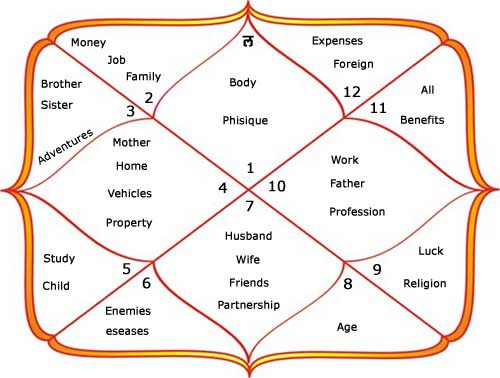
Kundli matching by date of birth and time is the Vedic astrology process of comparing two birth charts, built from each person’s exact date, time, and place of birth, to check marriage compatibility. This is a traditional practice, not scientifically validated compatibility testing, and that’s the lens this guide keeps throughout.
Here’s how the process actually works: how the 36 gunas get calculated, whether birth time really matters, and what a low score means for your situation, along with the name-based version of matching and what a mismatch tends to lead to in practice.
What Is Kundli Matching for Marriage?
Kundli matching compares two birth charts to work out how compatible two people are as married partners, according to Vedic astrology. It’s been tied to Hindu marriage customs for generations, mostly in arranged marriages. Love-marriage couples turn to it too, sometimes just for a second opinion, sometimes to give a skeptical family something concrete to look at.
It isn’t a single pass-or-fail check. An astrologer looks at Moon sign, nakshatra, and a handful of other chart positions, scores the pairing across eight separate factors, and adds it all up to a total out of 36. A dosha check, Mangal Dosha most often, usually happens alongside this, not as part of the same scoring.
A lot of people use “kundli matching,” “Guna Milan,” and a full horoscope reading interchangeably, but they aren’t quite the same thing. Think of kundli matching as the broad umbrella covering the whole comparison. Guna Milan is one specific piece under that umbrella, the 36-point scoring system built on eight kootas. Go beyond that and you’re into full horoscope reading territory, which drags in the Ascendant, the houses, planetary placements, the Navamsa chart, and Mangal Dosha, on top of whatever those 36 points already covered.
Kundli Matching for Marriage is worth a look if you want the fuller remedy picture across all eight kootas, not just this one dosha.
How Kundli Matching by Date of Birth and Time Works
Start with the date, time, and place of birth for both people. That’s what builds the charts. Birth time matters most for a full chart reading, since the Ascendant and houses depend on accurate timing. Ashtakoota is different: its main inputs are the Moon sign and nakshatra, so uncertainty in birth time may not change the 36-point calculation. A boundary case is the exception, the Moon sitting right at the edge of a sign or nakshatra can tip things either way, and pulling in other chart details alongside the score can too.
Once the charts are ready, the astrologer lines up the Moon sign and nakshatra for each person and works through the eight kootas one by one. Exactly how each koota is scored depends on its own rule, covered in the next section. Add up all eight and you get the final number, somewhere between 0 and 36.
How the 36 Points Actually Add Up
Each koota has its own ceiling: 1, 2, 3, 4, 5, 6, 7, and 8, in that order, totalling 36. The Moon sign and nakshatra classification of both people decides the actual number, run through whatever rule that particular koota happens to use. A few kootas can land anywhere across their range. Others just don’t work that way; the outcome is more fixed.
Here’s what that looks like with real numbers. Say a comparison comes out to 1 out of 1 on Varna, 1 out of 2 on Vashya, 2 out of 3 on Tara, 3 out of 4 on Yoni, 5 out of 5 on Graha Maitri, 4 out of 6 on Gana, 7 out of 7 on Bhakoot, and 0 out of 8 on Nadi. Add those up and you land on 23 out of 36, a total that falls in the range some traditional systems describe as favourable.
Nadi doesn’t just disappear into the average. It carries real weight in most traditional readings, covered in more depth in Nadi Dosha in Kundli Matching, and a zero there is exactly the kind of single result that tends to get pulled back out for a closer look.
What Information Is Needed for Kundli Matching?
Date of birth, birth time, and place of birth, for both people, is the standard ask. Some astrologers also want names, either just to keep records straight or to run a traditional name-based read alongside the main chart.
Kundli Matching by Name and Date of Birth: What It Can and Cannot Tell You
There’s a second, looser method built around the name itself. In Vedic naming traditions, a child’s name is sometimes picked using a sound tied to their birth nakshatra, so the name can hint at which nakshatra someone belongs to. Astrologers reach for this mostly when nobody has a reliable birth time on record, which can be an issue with older family members whose birth details are hard to verify.
It’s a hint, not a reading. Plenty of names get chosen for reasons that have nothing to do with nakshatra syllables: family tradition, a name already common in the household, whatever a grandparent liked. So this method can’t reliably pin down someone’s actual birth nakshatra, and it definitely can’t touch anything that depends on exact timing, like house placements or specific doshas.
Some practitioners will use it when nothing better is available, but it’s an approximation standing in for a calculation, not a substitute for one. If a real decision hangs on the outcome, it’s worth the extra effort of tracking down the actual birth details, old hospital records, a relative who remembers, whatever gets you closer to the real time.
What Is Guna Milan? Understanding the 8 Kootas
| Koota | Maximum Points | Traditionally Associated With |
| Varna | 1 | Spiritual temperament and ego compatibility |
| Vashya | 2 | Mutual influence and relationship dynamics |
| Tara | 3 | Traditional wellbeing and compatibility |
| Yoni | 4 | Physical and intimate compatibility |
| Graha Maitri | 5 | Mental and intellectual compatibility |
| Gana | 6 | Nature, temperament, and behaviour |
| Bhakoot | 7 | Family life and prosperity |
| Nadi | 8 | Health, family life, and progeny, in traditional readings |
Nadi and Bhakoot carry the two largest point values in the Ashtakoota system, at 8 and 7 respectively. In traditional interpretations, an unfavourable result in either may receive separate attention rather than being treated as just another contribution to the overall total.
Is Kundli Matching Necessary Before Marriage?
Depends who you ask, and that’s not a dodge. Families that follow this closely see it as a way of examining a proposed match before marriage. Others treat it as optional guidance, or skip it entirely.
Plenty of couples in love marriages question why it should factor into a decision they’ve already made with clear eyes, and that’s a fair position. Nothing in the Hindu Marriage Act, 1955 requires it. The Act’s actual conditions, age, existing marital status, prohibited relationships, sit in Section 5, and how a marriage gets solemnised through customary rites is a separate matter covered in Section 7. A guna score doesn’t show up in either. Registration rules vary by state, so check local procedure if that matters to you.
As for what actually works in practice: treat the report as one voice in the room, not the only one. Money, kids, careers, how you fight, how you handle extended family, those conversations carry just as much weight, sometimes more, than a single score ever could.
What Happens If Kundli Does Not Match?
A weak score, even a flagged dosha, doesn’t mean the wedding’s off. Most of the time, an astrologer digs into the traditional exceptions first, to check whether something softens the weak spot. If that doesn’t hold up, specific remedies get suggested for whichever koota or dosha caused the trouble. Only when several serious issues pile up at once does anyone seriously recommend reconsidering the match, and even then it’s not automatic.
Mangal Dosha gets checked separately from the guna score, not folded into it, so a full reading usually weighs both rather than resting on the 36-point number alone. Mangal Dosha in Kundli Matching breaks down how that particular dosha gets read, along with the exceptions different schools apply.
What Does the Kundli Matching Score Actually Mean?
One traditional scale breaks it down like this: 0 to 16 reads as inauspicious, 17 to 20 as middling, 21 to 30 as very good, 31 to 36 as excellent. People quote eighteen constantly as the benchmark, but it was never meant as a strict pass mark. Nadi and Bhakoot can override that headline number in some readings, so the total alone rarely tells the full story.
| Guna Score | One Traditional Interpretation |
| 0 to 16 | Often considered inauspicious |
| 17 to 20 | Often considered middling |
| 21 to 30 | Often considered very good |
| 31 to 36 | Often considered excellent |
Nadi and Bhakoot specifically carry extra weight in a lot of readings, so a strong overall number doesn’t automatically cancel out a bad result on either of those two. These bands aren’t fixed across every school of thought either.
Can a High Guna Score Still Be a Bad Match?
Yes, and this trips people up more than it should. The 36-point system checks specific things. It doesn’t check everything. A strong total can sit right next to a Mangal Dosha, an awkward planetary placement, or some other factor a good astrologer would still want to look at separately.
Thirty out of 36 doesn’t promise a happy marriage. Fourteen doesn’t doom one either. The number is one piece of a much bigger picture within Vedic astrology, not the final word on it.
Love Marriage vs Arranged Marriage: Does Kundli Matching Change?
The method itself doesn’t change. Same eight kootas, same 36-point ceiling, arranged or love match, it doesn’t matter. What changes is what people do with the result afterward.
Families weighing an arranged proposal often bring the report into an early conversation, before things go much further. A couple who’s already decided to marry tends to use it differently, more to catch friction points early or to hand a reluctant parent something concrete to sit with.
How to Get a Kundli Matched: Step by Step
Simpler than most people expect, once you know what to gather.
- Get the date and place of birth for both people, plus the most accurate birth time you can find. Exact time matters more if a full-chart reading is involved, less so for a straight Ashtakoota score.
- Pass those details to the astrologer.
- The astrologer builds both charts, runs the Ashtakoota comparison, and checks for doshas.
- A report comes back: the score, any doshas flagged, remedies if something needs one.
Most people booking a report just hand over both sets of birth details and let the astrologer take it from there. Comparing the charts, working out the score, flagging anything else that comes up, that part’s the astrologer’s job, not something you need to manage yourself.
Frequently Asked Questions
Q: Is kundli matching legally required for marriage in India?
A: No. The Hindu Marriage Act, 1955 doesn’t list it as a condition for marriage. It’s cultural, tied to religious tradition rather than something the law requires, though registration rules do shift by state, so it’s worth checking local procedure if that matters to you.
Q: Does a low score guarantee problems in the marriage?
A: No. A guna score is not a scientifically validated predictor of marital success or relationship compatibility. It doesn’t guarantee a good marriage on the high end, and it doesn’t doom one on the low end either. What the number leaves out entirely is how two people communicate, handle money, or actually treat each other day to day.
Q: How many gunas should match for marriage?
A: Eighteen is the number everyone quotes, though it was never meant to be a finish line. Two pairings can both land on exactly eighteen and mean completely different things, depending on whether Nadi and Bhakoot came out strong or weak underneath that total.
Q: Is matching by name and date of birth as accurate as matching by exact birth time?
A: Not really. It’s a reasonable starting point when the actual time isn’t available, but it can’t reach the house placements or specific doshas that a full, birth-time-based chart picks up. Treat it as a first look, not the final word.
Q: Is kundli matching different from nakshatra matching?
A: Nakshatra plays a big role in Guna Milan, but not every koota leans on it the same way. Some are calculated straight from nakshatra; others pull from the Moon sign, its ruling planet, or other classifications entirely.
Q: Can remedies actually fix a bad match?
A: Not in the sense of rewriting the chart. Remedies such as rituals, prayers, or mantras traditionally associated with a particular dosha or koota are meant to soften its effect, not erase it outright. In traditional practice, they’re paired with real effort from both people, never used instead of it.
